When mentioning Ninh Binh, many people will immediately think of Trang An, Tam Coc or Hang Mua. But if you want to understand why this land is considered the cradle of the nation's history, you need to start from another place: the ancient capital of Hoa Lu.
Hidden among the majestic limestone mountains, Hoa Lu was the political, military and cultural center of Dai Co Viet more than a thousand years ago. This is where King Dinh Tien Hoang unified the country after the chaos of the 12 warlords, opening a new chapter in the nation's history.
Today, although the magnificent palaces of the ancient capital are no longer intact, Hoa Lu is still one of the most important historical relics in Vietnam and a destination not to be missed in the Ninh Binh travel itinerary with Ninh Binh Booking.
Hoa Lu – The first capital of Dai Co Viet
The history of Hoa Lu is closely associated with the name of Dinh Bo Linh.
In 968, after suppressing the rebellion of 12 warlords, Dinh Bo Linh ascended the throne, took the title Dinh Tien Hoang and named the country Dai Co Viet. This is considered a milestone marking the birth of the first centralized feudal state in Vietnamese history.
To build a new capital, he chose Hoa Lu.
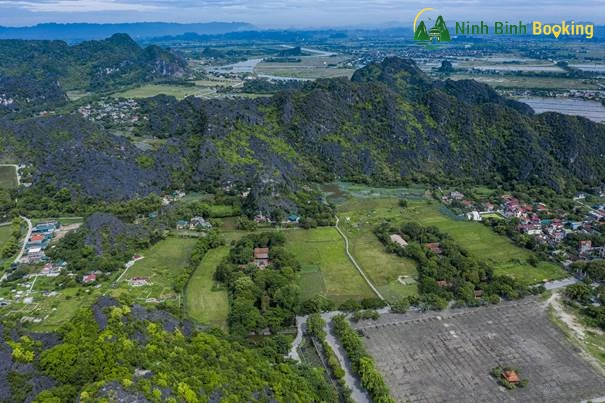
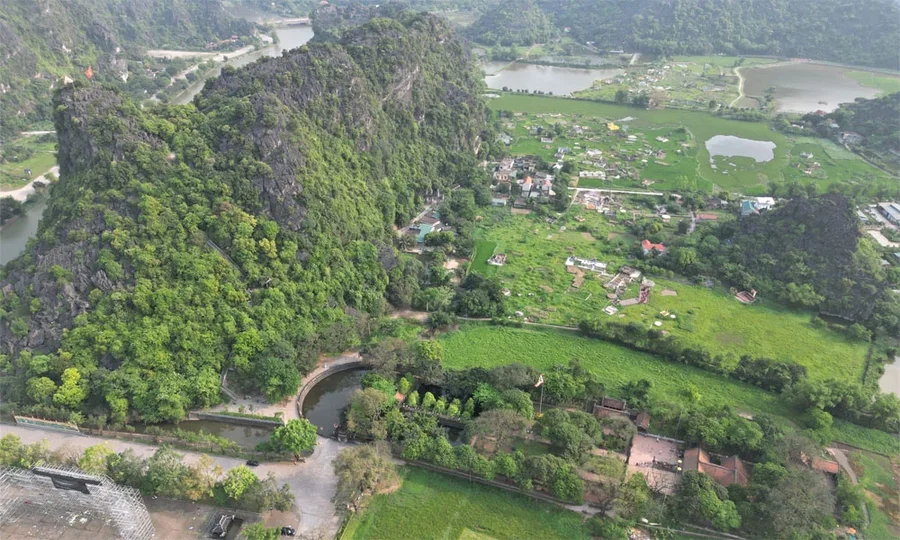
From a military perspective, this is an extremely smart decision. Hoa Lu is surrounded by a system of natural limestone mountains, with rivers in front and high mountains behind, forming solid natural walls.
In the context of the newly unified country and always facing the risk of invasion from the North, this terrain helps Hoa Lu become an almost impregnable natural fortress.
For more than 40 years under the Dinh and Early Le dynasties, Hoa Lu served as the country's largest power center before King Ly Thai To moved the capital to Thang Long in 1010.
What remains after more than a thousand years?
Many first-time visitors to Hoa Lu are often surprised not to see the massive citadels or magnificent palaces they imagined.
In fact, much of the ancient capital's architecture has been eroded by time.
However, what makes Hoa Lu special lies in the space that is still preserved today.
The limestone mountains still stand there as they once protected the capital more than a millennium ago. Ancient temples still retain traces of the first dynasties. And most importantly, the historical atmosphere is still present in every street, every ancient tiled roof.
According to practical experience from Ninh Binh Booking, Hoa Lu is a place that becomes more and more interesting the more you learn about it because each project is associated with a unique historical story.
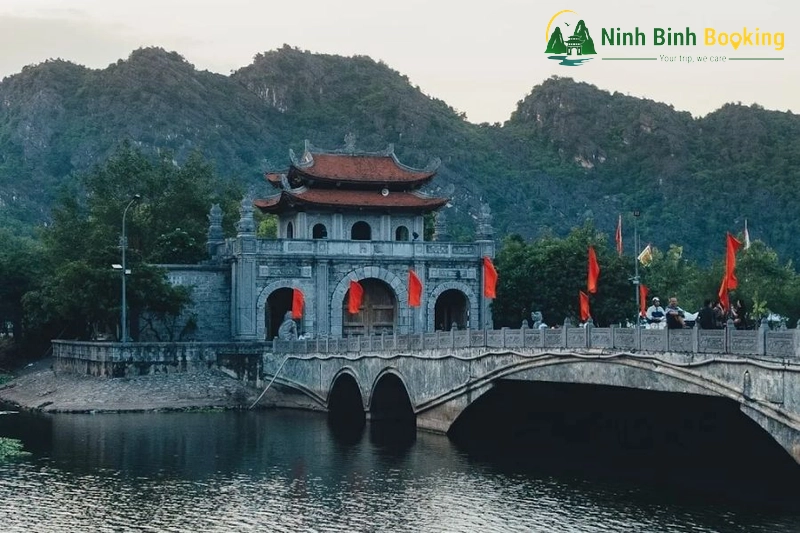
The Temple of King Dinh Tien Hoang - The heart of the ancient capital Hoa Lu
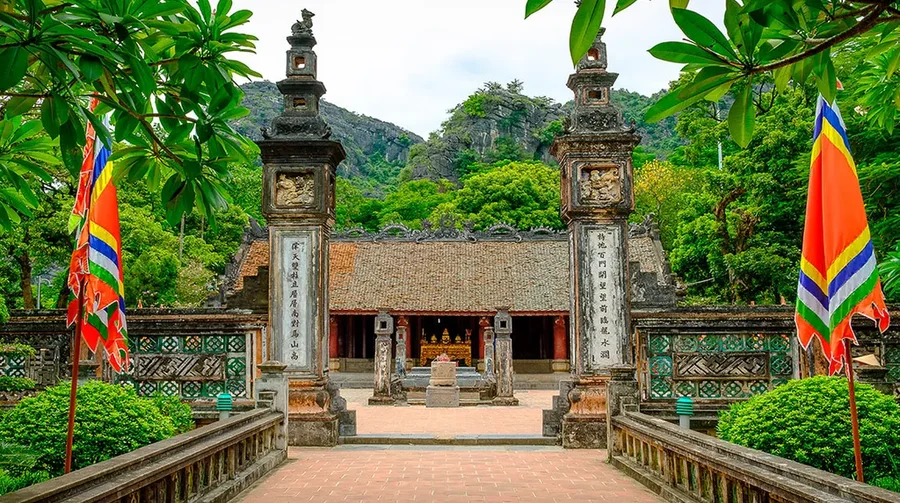
In the entire Hoa Lu relic complex, King Dinh Temple is the structure most visited by tourists.
The temple was built on the foundation of the old palace of the Dinh Dynasty and is the place to worship the Emperor who unified the country after many years of division.
Right from the entrance gate, visitors can feel the majesty of the building. The carvings of dragons, phoenixes and ancient patterns are extremely sophisticated, reflecting the artistic level of ancient Vietnamese people.
Inside the main hall is a statue of King Dinh Tien Hoang in a majestic posture, reminiscent of the hero who laid the foundation for the nation's first unified nation.
According to many researchers, this is one of the most beautiful and historically valuable king temples in Vietnam today.
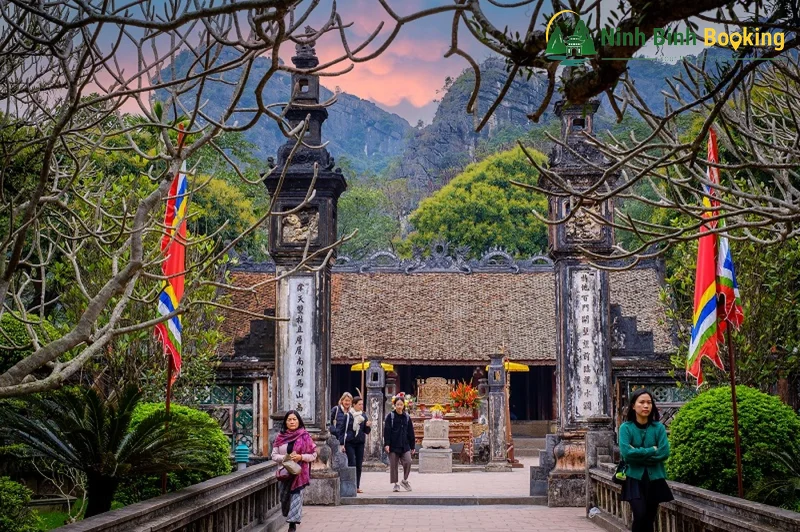
The Temple of King Le Dai Hanh - The mark of a king who protected the country
Just a few hundred meters from King Dinh Temple is King Le Dai Hanh Temple.
If Dinh Tien Hoang is remembered as the man who unified the country, Le Dai Hanh is famous for his role in protecting the young independence of Dai Co Viet.
Under his leadership, Dai Co Viet's army and people defeated the Song Dynasty's invasion in 981, affirming the new nation's position on the regional map.
The current temple has many architectural features similar to King Dinh Temple but still has unique details reflecting the Pre-Le Le period.
When visiting two consecutive temples, visitors can better imagine the first phase of Vietnamese feudal history.
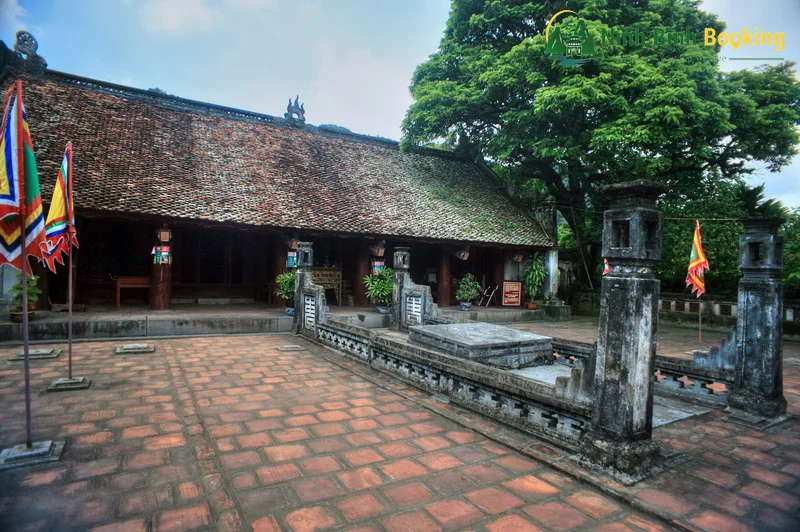
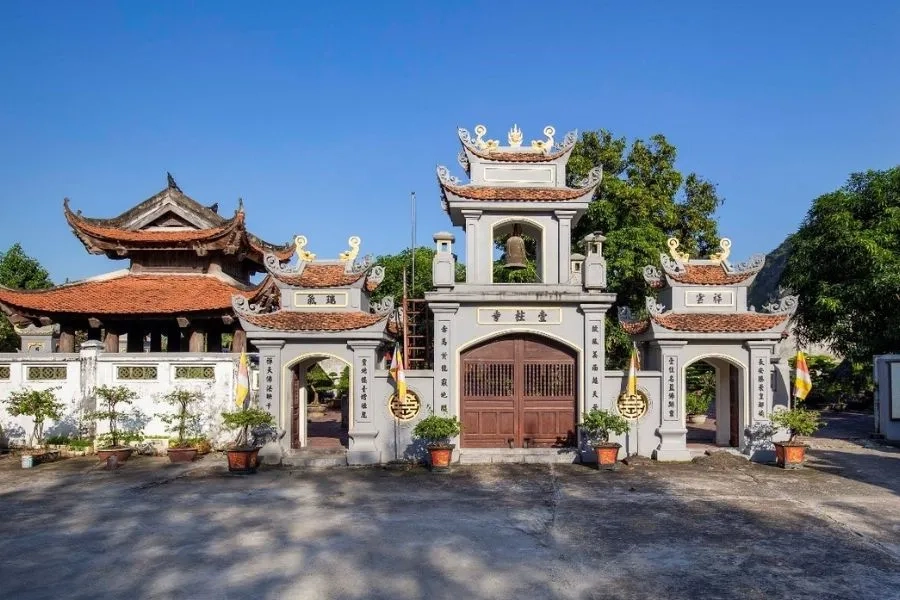
One Pillar Pagoda and a thousand-year-old Buddhist scripture column
Not far from the temple area is Nhat Tru Pagoda, one of the oldest pagodas in Ninh Binh.
What makes the pagoda's special value lies not in its scale but in the stone Buddhist scripture column erected in the Pre-Le Le period.
This is one of the very few artifacts that still exist from the period when Hoa Lu was the capital.
After more than a thousand years, the ancient inscriptions on the pillars still help researchers understand more about the cultural and Buddhist life of Vietnamese people at that time.
Am Tien Cave - Tuyet Tinh Coc of Ninh Binh
Located not far from the center of the ancient capital is Am Tien Cave, a place often called "Tuyet Tinh Coc" by tourists.
Different from the historical space of the temple, Am Tien impresses with its peaceful natural beauty.
The turquoise lake is located between limestone mountains, creating a scene almost completely separate from the outside world.
Historically, this place used to be a prison area for criminals during the Dinh Dynasty. Today, it becomes one of the most beautiful sights of the Hoa Lu region.
Ma Yen Mountain - The resting place of King Dinh Tien Hoang
Another important place at Hoa Lu is Ma Yen Mountain.
From a distance, the mountain is shaped like a saddle, so it was named that way.
On the top of the mountain is currently the place where King Dinh Tien Hoang's mausoleum is located.
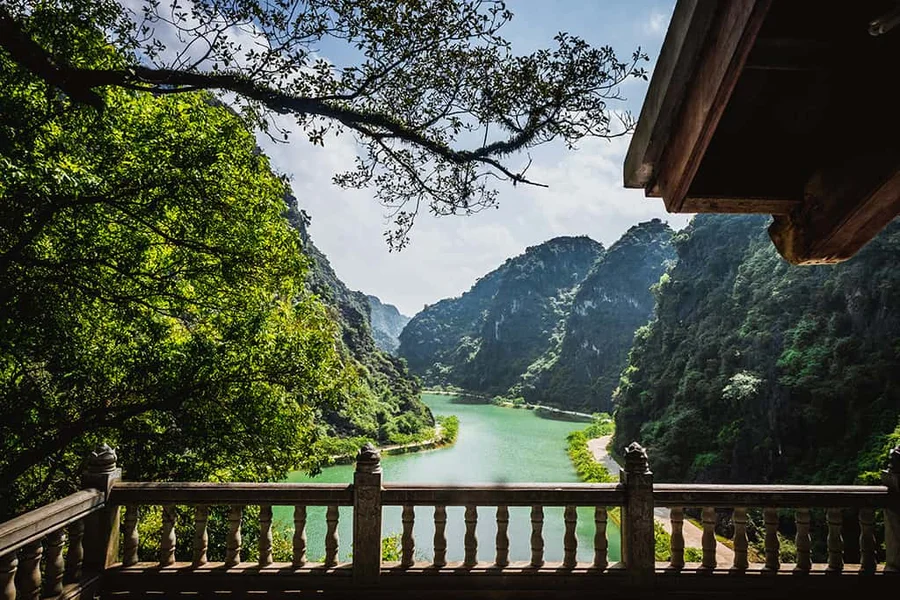
To reach the top, visitors need to climb hundreds of stone steps. Although it is quite tiring, in return is a wide-open view covering the entire ancient capital and the typical limestone mountains of Ninh Binh.
According to experience from Ninh Binh Booking, this is the most beautiful viewing spot in the entire Hoa Lu relic site.
Hoa Lu Festival – The flow of history continues
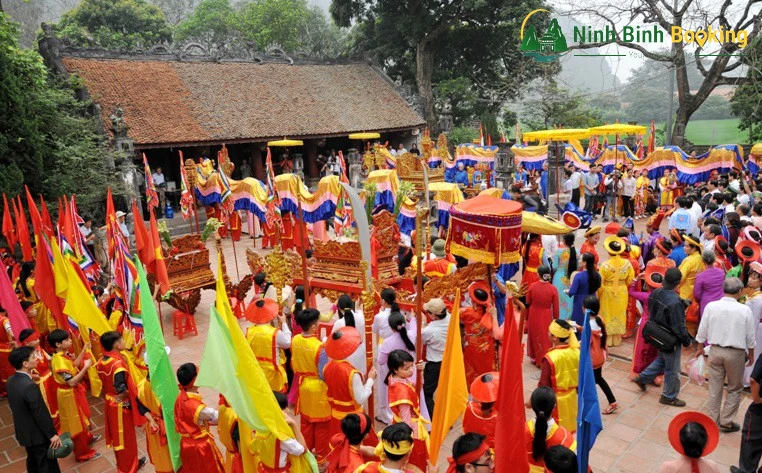
Every year in the third lunar month, tens of thousands of people and tourists come to Hoa Lu to attend Ninh Binh's largest traditional festival.
The festival is held to commemorate the contributions of King Dinh Tien Hoang and King Le Dai Hanh.
Traditional processions, sacrificial rituals and folk cultural activities help recreate the atmosphere of Dai Co Viet capital more than a thousand years ago.
This is also the time when Hoa Lu becomes the most vibrant and culturally rich of the year.
The role of Hoa Lu in Trang An Scenic Landscape Complex
In 2014, Trang An Scenic Landscape Complex was recognized by UNESCO as a World Cultural and Natural Heritage.
In that complex, Hoa Lu serves as the most important historical and cultural center.
If Trang An represents nature, Bai Dinh represents spirituality, then Hoa Lu is the historical soul of the entire ancient capital.
It is the combination of history, culture and nature that has created a special attraction for Ninh Binh on Vietnam's tourist map.
Should we visit the ancient capital Hoa Lu?
The answer is yes.
Even if you are not a history lover, Hoa Lu is still a destination worth experiencing thanks to its ancient space, beautiful natural landscapes and fascinating stories associated with the country's formation process.
According to assessments from Ninh Binh Booking, Hoa Lu is more than just a relic.
It is a place that helps tourists understand why Ninh Binh is called the ancient capital, and at the same time better feel the journey of building and defending the country of the Vietnamese people more than a thousand years ago.